Blog
Marketing Automation Agency in 2026: What It Costs, What It Delivers, and How EU Businesses Should Choose One
By Tech Instance · · 11 min read
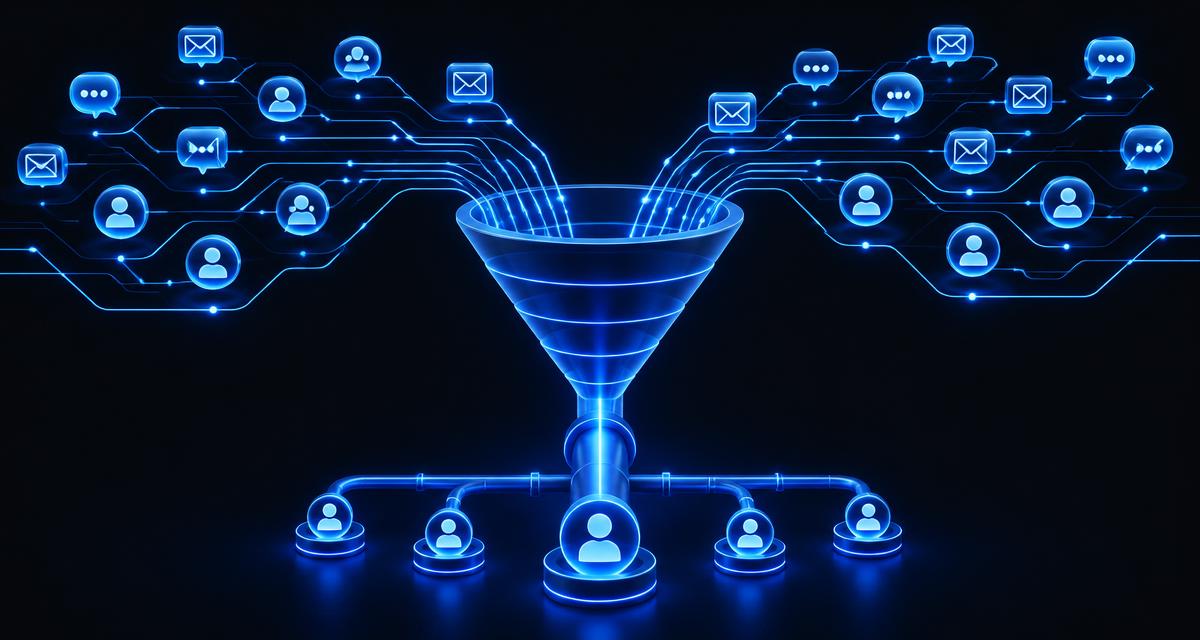
The short answer: a marketing automation agency builds the systems that capture your leads, follow up in minutes, nurture them for months, and book sales calls while you sleep. Typical agency pricing is $2,500 to $10,000 for a full build, then $1,500 to $7,500 per month for ongoing optimization, with most businesses recovering the investment in three to six months. For EU businesses, one more rule matters this year: the EU AI Act's transparency obligations now apply to AI-generated marketing content, so your automation has to disclose what it is, not just perform.
Marketing automation is the baseline now, not the edge
The 2026 numbers are blunt. Marketing automation is used by 78 percent of mid-market B2B companies, up from 61 percent three years ago, and 41 percent of businesses under 50 employees now run at least one automation platform, per 2026 benchmark data. The US Chamber of Commerce's 2026 Small Business AI Index found SMB marketing automation adoption jumped from 30 to 43 percent in a single year, the fastest-growing automation segment in the small business market. The global market is worth $9.8 billion in 2026 and growing 12.4 percent a year.
Here is the uncomfortable part for anyone still on the fence. The 22 percent of B2B companies running without a platform now lose qualified pipeline share to automated competitors at a measurable rate, with benchmark data showing about a 14 percent gap in opportunity creation velocity. If your competitor follows up with every lead in four minutes and yours takes two days, the market does not care how good your product is. Speed wins, and speed is automated.
For EU businesses there is a second deadline running in parallel. The EU AI Act's transparency obligations for AI-generated content and AI-driven customer interaction are now in effect, with the first enforcement actions landing in October 2026. If your automation sends AI-written emails, runs an AI chatbot, or generates personalized content, the law now requires disclosure, and your agency has to build that in from day one. Our EU AI Act chatbot compliance guide covers the chatbot side in depth, and the same principle applies across all automated marketing: transparency is a legal requirement now, not a nice-to-have.
What the agency actually builds: five systems
Strip away the jargon and an agency builds five systems, in this order.
1. Lead capture and qualification.
Every form, landing page, ad click, and phone call flows into one database with automatic lead scoring and campaign tracking, so you know which campaigns produce customers, not just clicks. If the tracking is broken, the automation is expensive guesswork.
2. Instant follow-up.
The single highest-ROI workflow in marketing automation. When a lead comes in, automated sequences call, text, and email within minutes. Leads contacted within five minutes convert dramatically better than leads contacted in an hour, and 78 percent of sales go to the company that responds first. Agencies build missed-call text-back, instant SMS, and multi-step email sequences around this principle.
3. Nurture and reactivation.
Most leads are not ready to buy today. Automated nurture keeps your business in front of them for months, and reactivation campaigns resurrect dead leads from your old database. Automated emails are about 2 percent of total email volume yet drive roughly 37 percent of all email-generated sales revenue, per 2026 benchmarks.
4. Sales pipeline automation.
The CRM moves leads through stages automatically: appointment reminders, review requests, referral asks, upsell sequences. The median mid-market team now runs 24 active workflows. The agency builds them and keeps them working as your business changes.
5. Reporting and attribution.
Every workflow reports revenue, not vanity metrics. Ad spend, email engagement, and pipeline movement connect into one dashboard. In the DesignLoud 2026 small business survey, 44 percent of businesses said measuring ROI is their biggest marketing challenge. This system is the answer.
Agency vs DIY vs freelancer vs in-house
| Option | Typical 2026 cost (USD) | Best for | Watch out for |
|---|---|---|---|
| Marketing automation agency | $2,500 to $10,000 setup, $1,500 to $7,500/month | Businesses that want it built right and managed | Long contracts; make sure you own the accounts |
| DIY with platform | $97 to $1,200/month in software | Solo operators with time to learn | 40+ hours of setup; automation debt piles up fast |
| Freelancer | $1,000 to $5,000 per project | One-off workflow builds | Disappears after delivery; no optimization loop |
| In-house hire | $4,500 to $8,000/month salary | Companies spending $20,000+/month on marketing | One person rarely covers strategy plus tech plus copy |
The pattern across small businesses in 2026 is consistent. DIY starts cheap and stalls after three workflows. Freelancers deliver a build but automation decays without maintenance. In-house makes sense only at serious marketing spend. An agency earns its fee in two places: speed of implementation and the continuous optimization loop, testing subject lines, rebuilding sequences when conversion drops, and adapting when the law changes, which in the EU happens regularly now.
What it costs in 2026, broken down honestly
Software.
GoHighLevel runs $97 to $497 per month flat with unlimited contacts and users, which is why it dominates the small-agency market. HubSpot Marketing Hub Professional starts around $800 to $1,200 per month plus a mandatory onboarding fee of about $3,000, with per-seat and per-contact pricing that compounds as you grow. Our GoHighLevel vs HubSpot comparison breaks down the full math. Budget roughly $100 to $1,500 per month in software for most small businesses.
Build.
A full initial build, meaning CRM setup, tracking, lead capture, core follow-up and nurture sequences, and reporting, typically runs $2,500 to $10,000 as a one-time project. A single-location business with one offer sits at the low end. A B2B firm with a 90-day sales cycle and five lead sources sits at the high end.
Retainer.
Ongoing management typically runs $1,500 to $7,500 per month. Be suspicious of retainers under $1,000 a month: at that price nobody is actively optimizing anything.
EU compliance.
EU businesses should budget a compliance review into the engagement: GDPR consent management, AI Act disclosure for AI-generated content and chatbots, and current data processing agreements with every platform. If the agency shrugs at the words AI Act, that is a red flag. Our GDPR guide for AI voice agents shows how these requirements play out in practice.
The ROI math, with real numbers
Take 200 leads a month converting at 5 percent: 10 customers at $2,000 average value, or $20,000 a month. Automate instant follow-up and nurture, and industry data says you get roughly 14.5 percent higher sales productivity and 12.2 percent lower marketing overhead. If your close rate moves from 5 to 6.5 percent, that is three extra customers a month, or $6,000 in revenue from the same ad spend. Against a $2,500 monthly retainer plus $300 in software, payback is under a month. Automation does not buy you new leads. It stops you wasting the ones you already paid for.
That is also why the agency question is really a timing question. If you spend more than about $3,000 a month generating leads and have no automation, you are losing more to slow follow-up than a retainer costs. The average small business marketing budget is $4,200 a month, and 62 percent cite limited staff as their biggest constraint. Automation is how a small team punches above its weight.
7 questions that separate real agencies from pretenders
1. Which platforms are you certified in, and why did you pick that one for me?
A real agency explains the choice in terms of your business. If the answer is always the same platform, you are talking to a reseller, not an advisor.
2. Who owns the accounts and the data?
Every ad account, CRM, automation platform, and domain must be registered in YOUR name. Get it in writing before the first invoice.
3. Show me revenue reporting from a client like me.
Not opens or clicks. Revenue attributed to workflows. For the broader buyer's guide framework, see our guide to choosing an AI automation agency.
4. How do you handle EU AI Act and GDPR compliance?
The agency should describe consent management, AI disclosure, and data processing agreements as standard parts of the build, not an upsell. Vague answers mean they have not done the homework.
5. What does the optimization loop look like?
You want a cadence: weekly review, monthly testing roadmap, quarterly strategy. "We check it monthly" is a weak answer.
6. What is the contract term and the exit?
Twelve-month lock-ins with no performance clause are a red flag. Honest agencies work on a 3 to 6 month initial term, then month to month.
7. Do you integrate with our sales process or just the marketing tools?
Automation that stops at the marketing handoff is half a system. The best agencies wire automation through the CRM pipeline, appointment booking, and post-sale follow-up, because that is where revenue happens.
The platform question, answered for EU businesses
GoHighLevel is the flat-rate workhorse: $97 to $497 a month, unlimited contacts and users, CRM, email, SMS, calendars, funnels, and an AI voice agent in one system. For businesses under 50 staff running lead generation and appointment booking, it is usually the cheapest complete stack. The trade-off is a smaller integration ecosystem and less reporting depth.
HubSpot is the enterprise standard: deeper reporting, a much larger integration ecosystem, excellent content tools. The trade-off is cost, around $800 to $1,200 a month for Marketing Hub Professional plus $3,000 onboarding, with annual contracts at the Professional tier.
For most EU small businesses, the honest answer is GoHighLevel for cost and completeness, HubSpot when you have a RevOps team and a content program that needs its CMS. A good agency recommends based on your math, not their partnership commission. If you are also weighing expert help on the platform side, our guide to hiring automation experts covers what to look for.
The 2026 trend that changes the agency brief
Marketing automation in 2026 is not the rule-based drip campaigns of 2020. Agentic AI is the layer on top: AI agents that qualify leads conversationally, write personalized follow-up, and optimize send times without human rules for every case. Ask the agency how they use AI agents inside the automation, not just whether they send emails. Agencies still selling static drip sequences in 2026 are selling yesterday's product at today's prices.
Frequently Asked Questions
How much does a marketing automation agency cost in 2026?
A full initial build typically costs $2,500 to $10,000 as a one-time project. Ongoing management runs $1,500 to $7,500 per month. Software is separate: roughly $97 to $497 per month for GoHighLevel, or $800 to $1,200 per month plus a $3,000 onboarding fee for HubSpot Marketing Hub Professional.
How fast does marketing automation pay for itself?
Most small businesses see payback in three to six months. Automated instant follow-up and nurture typically lift close rates enough that three to five extra customers a month covers the retainer. For the general automation cost picture, see our AI automation cost guide.
Can I do marketing automation myself instead of hiring an agency?
DIY works if you have 40+ hours to learn the platform, but most businesses stall after a few workflows. A freelancer suits a one-off build. An agency makes sense when you generate more than about $3,000 a month in leads and want continuous optimization.
What should an EU business check before hiring a marketing automation agency?
GDPR consent management in every form and sequence, EU AI Act transparency for AI-generated content and chatbots, current data processing agreements with every platform, and data residency you are comfortable with. Ask the agency to describe these as standard, not extras.
HubSpot or GoHighLevel for marketing automation?
For most small businesses, GoHighLevel wins on cost and completeness: flat $97 to $497 a month with unlimited contacts, CRM, SMS, calendars, and funnels in one system. HubSpot wins on reporting depth and integrations at $800 to $1,200 a month plus onboarding. Choose based on team size and reporting needs.
How long does a marketing automation build take?
A standard small-business build takes four to eight weeks from kickoff to live workflows. Complex B2B builds take eight to twelve weeks. Anything promised in under two weeks is a template install, not a build.
What is the difference between marketing automation and an AI employee?
Marketing automation is the system: workflows, sequences, integrations. An AI employee is one component inside it, like a voice agent answering calls or a chatbot qualifying visitors. Our AI employee guide breaks down what that layer costs and does on its own.
Marketing automation is table stakes in 2026. The differentiator is who builds yours, and whether they build it for your revenue or for their retainer. If you want an automation system designed around your actual sales process, with EU compliance built in from day one, book a strategy call and we will map your first 90 days before you spend a dollar.
Ready to Build Your Growth System?
Talk with Tech Instance about AI automation, CRM, web development, and SEO for your business.