Blog
AI Voice Agent for Restaurants: How to Stop Missing 43% of Calls in 2026
By Tech Instance · · 11 min read
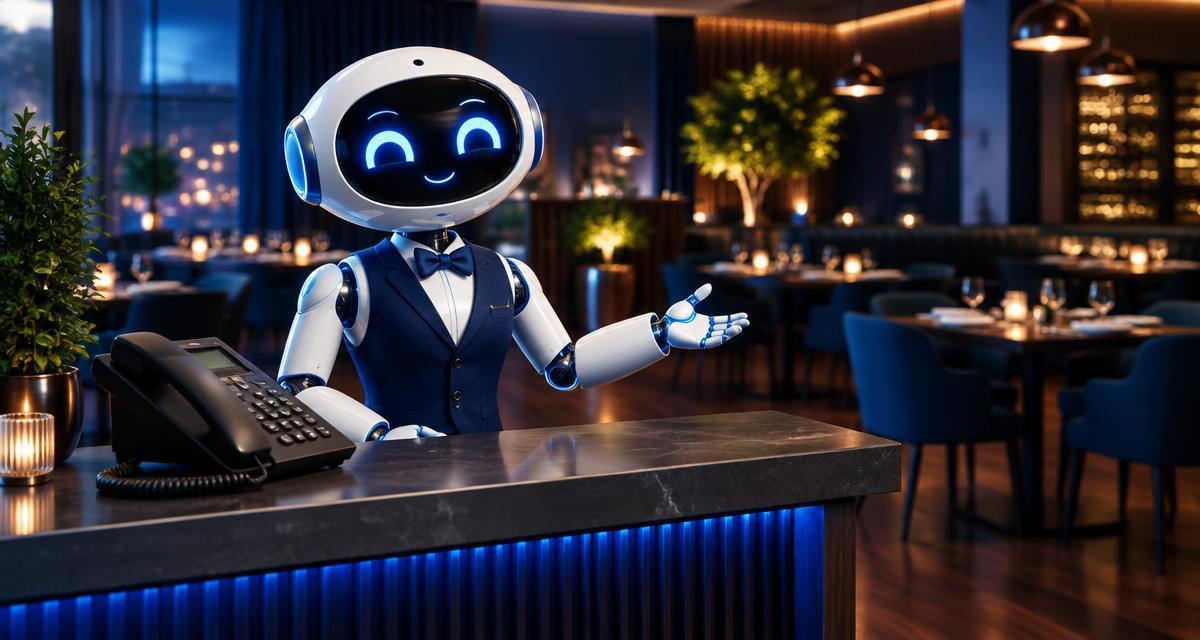
The short answer: an AI voice agent answers your restaurant's phone on the first ring, every time, and books tables straight into your reservation system. In 2026, venues using one report 15 percent more reservations from the calls they used to miss, and one restaurant group saw phone covers jump 141 percent in six months after deployment. Typical cost is $199 to $399 per location per month on flat-rate plans, with no per-minute billing, and most operators see payback inside a single month of dinner service. The rest of this guide covers what the agent actually does, what it costs, and how to buy one without getting locked into the wrong contract.
The problem hiding in plain sight: 43 percent of calls go unanswered
In August 2026, AI concierge platform HeyGuest published research that should make every restaurateur uncomfortable. During normal operations, 43 percent of incoming restaurant calls go unanswered. Sixty percent of those missed calls are direct revenue inquiries: table bookings, takeout orders, and private event requests. Sixty-nine percent of customers who do not get through simply give up, and 85 percent never call back after reaching voicemail.
Read that again slowly. Nearly half your calls. Mostly people trying to spend money. And they are gone after one unanswered ring.
The pattern is easy to recognize if you have ever worked a Friday service. The dining room is full, the line is at the door, and the phone keeps ringing. Someone has to choose between the guest standing in front of them and the caller they cannot see. The guest wins, correctly, and the caller goes to voicemail, where 85 percent of them vanish for good.
Restaurants have always known the phone is the weakest link in front of house. What changed in 2026 is that fixing it no longer requires hiring another host.
What an AI voice agent actually does for a restaurant
An AI voice agent is not a phone tree. Nobody presses 1 for reservations. A caller hears a natural voice that greets them, and the conversation plays out like talking to a good host: the agent asks when they would like to come in, how many guests, checks availability in real time, confirms the booking, and notes anything unusual like a wheelchair, a birthday cake, or a severe nut allergy.
Beyond reservations, the useful ones handle the whole front-of-house phone job:
- Table bookings, modifications, and cancellations, written directly into the reservation book
- Menu questions and dietary requirements, answered from your actual menu
- Hours, directions, parking, and wait-time questions
- Takeout and pickup orders, pushed into the POS so staff never re-key them
- After-hours calls, which previously went to a voicemail nobody checked until morning
- Private event and catering inquiries, captured with details and routed to the right person
- Waitlist management, including offering cancellation slots to the right guests
The last point is the one operators talk about most after a month of use. An AI system does not call a static waitlist in order. The newer reservation integrations predict which waitlisted guest is most likely to accept a specific slot based on their booking history, which means cancellations get refilled instead of dying on a list.
2026 is the year voice AI moved front of house
The trend line this year has been unmistakable, and it is concentrated in hospitality.
In May 2026, serial entrepreneur Dominique Gagnon presented a case at a Business Development Bank of Canada webinar that has been cited ever since: a Montreal startup built an AI voice agent that answers phones for restaurants, and the venues using it recorded roughly 15 percent more reservations. Not from advertising. Not from discounts. From answering the calls they were already getting.
OpenTable partnered with voice AI specialist Poly AI on a reservation assistant that answers every inbound call in natural language, handles modifications, and manages cancellations without staff involvement. One restaurant group reported a 141 percent increase in phone covers in the six months after deployment. Tablevoice, an AI host built specifically for restaurants, announced its own OpenTable integration this year, confirming bookings in real time and noting special requests.
In Australia and New Zealand the shift is already visible on the ground. Three popular Auckland restaurants, Jungle 8, Lucky 8, and Hazy Tiger, now run voice AI from New Zealand company Syntalia. Jungle 8 says the system handles more than 1,600 minutes of calls a month and cut the time staff spend on the phone by 60 percent. Lucky 8's comment is the whole pitch in one line: "We used to miss calls during service. Now, every customer gets an instant answer and a table booking, boosting our revenue." Separately, restaurant voice AI company Sadie partnered with ResDiary in September 2026, connecting conversational AI directly to the reservation management platform thousands of venues already use.
OpenTable's 2026 Dining Trends Report adds the demand side: experiential dining was up 46 percent year over year in 2025. Diners are booking more, calling more, and expecting an answer.
October 2026: voice AI crossed into the mainstream
The month this guide was published was also the month voice AI stopped looking like an experiment. On October 13, 2026, Dapta raised $6 million to push its AI sales agent, Dapti, deeper into small and medium businesses. The company says Dapti has passed 200,000 users and $4 million in annual revenue, adding about 4,000 new users a week, and its strongest verticals are exactly the ones that live on the phone: financial services, home services, law firms, and insurance brokers.
The voice layer underneath is scaling even faster. Voice AI company ElevenLabs, now valued near $22 billion, says India has become its second-largest market with more than 100 million AI-agent conversations recorded in a single year across 14 Indian languages, and it plans to invest hundreds of millions of dollars there. A Business Standard survey published October 8, 2026 found 31 percent of surveyed organisations already in limited voice-AI production and 13 percent scaled across multiple customer journeys; 61 percent report cutting the cost per eligible interaction by more than 20 percent, and 68 percent saw ROI within 6 to 24 months.
Small businesses are not watching from the sidelines. An October 2026 Small Business and Entrepreneurship Council survey of 516 employers found 58 percent now use AI agents regularly or occasionally, with another 14 percent planning to start. Zendesk data shows AI chatbots handling 67 percent of customer inquiries and cutting response time by 84 percent. For restaurants, the takeaway is simple: the technology answering phones is no longer the risky bet. The risky bet is the phone that keeps ringing out while competitors answer.
The honest comparison: AI voice specialist vs alternatives
| Option | What it handles | Typical 2026 cost (USD) | Watch out for |
|---|---|---|---|
| AI voice agent (restaurant-specific) | Reservations, menu questions, orders, POS/reservation sync | $199 to $399/location/month flat | Needs correct menu + reservation data to start |
| General AI receptionist | Messages, basic booking, call routing | $29 to $349/month + per-minute fees | Weak hospitality integrations, counts minutes |
| Human answering service | Overflow calls, messages, simple bookings | $1 to $5/call, or $100 to $600/month by volume | Cannot book into your reservation system live |
| Hiring a dedicated host | Everything a human can do | $2,600 to $4,300/month fully loaded | Nights, weekends, sick days, and turnover |
Restaurant-specific platforms charge flat because they know the call pattern. Loman, an AI phone agent built for restaurants, starts at $199 a month with no per-minute charges and unlimited concurrent calls, which matters on a Friday night when ten callers ring at once. Slang.ai charges a flat $399 per location regardless of call volume. Pulse publishes $199 a month for 700 calls, $349 for 1,400, $499 for 2,000. Goodcall, which caps usage by unique customers rather than minutes, runs $79 to $249 a month.
Compare that against the human options. Live answering services publicly list $1 to $5 per call in 2026, which sounds cheap until volume hits: at $3 to $4 a call, 300 calls a month is $900 to $1,200, well past a flat AI plan at the same volume. A full-time in-house host costs $2,600 to $4,300 a month before you account for the shifts a human simply cannot cover, which are exactly the shifts when most calls come in.
Our AI receptionist cost guide breaks down the hire-versus-AI math across industries, and the 2026 AI voice agent cost breakdown covers platform pricing in depth. Restaurants are the vertical where the math is most lopsided, because the calls are short, repetitive, and concentrated at the exact hours humans are busiest.
The ROI math, with real numbers
Take a 60-seat restaurant doing Friday and Saturday turns. Assume 300 inbound calls a month and the industry figure that 43 percent go unanswered. That is 129 missed calls. If 60 percent are revenue inquiries, 77 callers a month were trying to book or order.
Now assume half of those would have converted with an average cover of $45. That is roughly 38 lost covers a month, or about $1,700 in monthly revenue walking away because the phone rang during service.
A flat-rate AI voice agent at $199 to $399 a month captures most of that. Even if the agent converts only a third of what the lost-call math suggests, the payback period is measured in weeks, not quarters. Operators using Loman have reported up to 22 percent higher phone revenue and up to 17 percent lower labor costs; one operator, Tony Boloney's, says it captures an extra 75 to 100 orders per month per location. Midland Pizza Co estimates it would lose over $200,000 a year without voice AI answering its phones.
The conservative version of this math still works. The aggressive version is why restaurant groups are signing multi-location deals.
What to check before you buy
Restaurant voice AI fails for boring reasons: wrong menu data, a reservation system it cannot write into, or an agent that panics on a noisy line during service. Check these eight things before signing.
1. Native reservation integration, not screen scraping.
The agent must read and write your actual reservation book. Look for named integrations: OpenTable, ResDiary, SevenRooms, or whatever your venue runs. If the answer is "we send you an email with the booking details," you are buying a message taker, not a reservation agent.
2. POS connection for takeout.
If you do meaningful phone orders, the agent should push tickets into Toast, Square, Clover, or your POS directly. Re-keying orders by hand is where errors and labor costs creep back in.
3. Unlimited concurrent calls.
Peak hour means simultaneous callers. A system that queues your third concurrent caller has recreated the busy signal with extra steps.
4. Noise and accent handling.
Restaurant phone audio is messy: kitchen noise, speakerphone, strong accents, kids shouting in the background. Ask for a live demo call from a noisy room, not a studio recording.
5. Multilingual support.
In markets like Sydney and Melbourne, a meaningful share of callers prefer a language other than English. Multilingual conversation is a standard feature on the better platforms now, but verify it covers your actual customer mix.
6. Confident human handoff.
The agent should hand off complaints, large parties, and anything it is not confident about to a person, with the full call context. The goal is that the phone never simply rings out, not that the AI handles literally everything.
7. After-hours coverage included.
Nights and weekends are when most reservation calls happen. Flat-rate plans include 24/7 coverage by default; per-minute plans bill you more for exactly the hours that matter most. Price the plan against your peak, not your average.
8. Who owns the data and the call recordings.
Your reservation patterns, no-show rates, and customer details are business intelligence. Check where recordings are stored, how long, and what happens to your data if you cancel. This is the same discipline our buyer's guide to choosing an AI automation agency applies to any vendor relationship.
A note for Australian operators
Australia's hospitality labor market makes this math especially sharp. Award wages, penalty rates for nights and weekends, and chronic front-of-house shortages mean the human alternative to a voice agent is not just expensive, it is often unavailable. The venues moving first are not replacing hosts; they are covering the shifts nobody can staff and the calls nobody can answer, then letting their existing team focus on the guests in the room. That is the framing to keep: the AI takes the phone so the humans can do hospitality.
One caution specific to the region: check where call data is stored and processed, and confirm the vendor's privacy terms cover Australian customer records properly. Voice recordings are personal information. A vendor that cannot answer that question cleanly is not ready for your business.
Frequently Asked Questions
How much does an AI voice agent cost for a restaurant in 2026?
Restaurant-specific platforms run $199 to $399 per location per month on flat-rate plans with no per-minute billing. Per-call general platforms can look cheaper at low volume ($1 to $5 per call) but pass the flat-rate cost once you exceed a few hundred calls a month. Custom builds through an agency start around $800 and climb with integrations.
Can an AI voice agent really book tables into my reservation system?
Yes, on the platforms with native integrations. The agent reads live availability and writes the booking into OpenTable, ResDiary, SevenRooms, or similar systems in real time, including party size, time, and special requests. Without a native integration, it can only take a message, which defeats the purpose.
Will callers know they are talking to an AI?
The good ones sound natural enough that most callers do not notice or do not care, especially for routine bookings. The honest operators disclose it upfront or on request, and disclosure is increasingly expected as voice AI goes mainstream. What callers care about is getting a table, not the technology.
What happens when the AI cannot handle a call?
A properly set up agent escalates: complaints, large party bookings, and low-confidence situations route to a staff member with the full call context attached. The standard is a human fallback path, not AI or nothing. Ask how escalation works before you sign, and test it.
Does it work after hours?
That is one of its main jobs. After-hours calls used to go to a voicemail nobody checked until morning; now they get answered, booked, or messaged back at 2am. Make sure your plan includes 24/7 coverage at the flat rate, since nights and weekends are when the calls concentrate.
Will it replace my hosts?
No, and that is the wrong way to think about it. It replaces the missed calls, the voicemail graveyard, and the choice between answering the phone and serving the table. Your hosts stay on the floor doing the work that earns repeat visits. The venues seeing the best results describe it as covering shifts and calls humans could never take, not replacing people.
Every missed call is a table you already earned walking out the door. In 2026, answering the phone is no longer a staffing problem. It is a solved technology problem with a $199-a-month answer. If you run a restaurant and your phone still rings out during service, that is the easiest revenue you will recover all year. Book a strategy call and we will map what a voice agent would capture for your venue.
Ready to Build Your Growth System?
Talk with Tech Instance about AI automation, CRM, web development, and SEO for your business.