Blog
AI Sales Agent for Small Business: What It Costs and What It Actually Does in 2026
By Tech Instance · · 9 min read
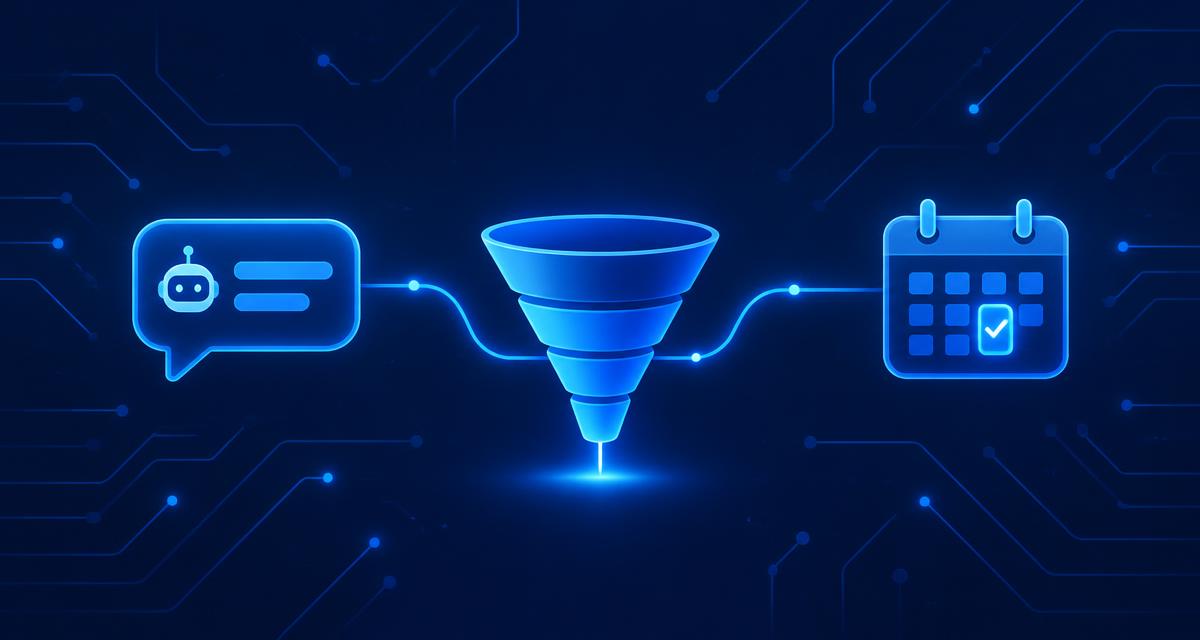
An AI sales agent is software that does the repetitive half of selling. It answers new leads in seconds, asks the qualifying questions, books the meeting, and chases the ones who went quiet. For a small business in 2026 it costs anywhere from $50 to $2,000 a month depending on how you set it up, and the honest version of the pitch is narrower than the ads: it replaces the volume work of a junior sales rep, not the rep. If your problem is leads dying because nobody follows up fast enough, an AI sales agent is probably the cheapest fix you will find. If your problem is closing, it is not.
What an AI sales agent actually does all day
Strip the marketing away and an AI sales agent does five jobs, all of them boring, all of them valuable:
Instant first touch. A lead fills in your form at 9:40pm and gets a real reply in under a minute, by text, email, or chat. No lost weekend enquiries.
Qualification. It asks the questions your best rep asks: budget range, timeline, whether they are actually a fit. Tyre-kickers get filtered before they ever reach your calendar. If you have ever wanted an AI appointment setter that does more than book, this is it.
Meeting booking. It checks your calendar, offers times, sends the invite, and nudges the no-shows.
Follow-up sequences. The lead who asked for a quote then went silent gets a polite check-in on day 3, day 7, day 14. Most small businesses simply do not do this. The agent does not mind chasing.
CRM housekeeping. Every conversation lands in your CRM with notes and a next step. No more mystery pipeline. If you run on GoHighLevel, this is the layer that makes your CRM finally tell the truth.
What it does not do: run discovery calls, read a room, negotiate, or build the relationship that closes a complex deal. The vendors who imply otherwise are selling you a demo, not a product.
The one number that explains the whole category
There is a reason AI sales agents took off before most other sales tech: the data on response time is brutal.
Across 5.7 million inbound leads, conversion rates were roughly 8 times higher when the first call landed within 5 minutes. A separate study of 3.5 million leads found that calling within a minute lifted conversion by 391 percent. And in a study of nearly a thousand B2B companies, the average first response took 47 hours, while leads contacted within five minutes closed at 32 percent against 12 percent for anything answered after a day.
Be honest about your own business. A form comes in at 7pm and gets answered tomorrow morning, which puts you in the 47-hour bucket. An AI sales agent is, at its core, a way to stop being slow. Everything else is a bonus. Pair it with a missed-call text-back setup and you have covered the two fastest ways small businesses bleed leads.
The four ways to get one, and what each costs
Prices below are in USD per month unless noted. There are four honest routes, and they suit very different businesses.
| Route | Typical cost | Setup effort | Best for |
|---|---|---|---|
| DIY tools (Zapier, Make, APIs) | $50-200/mo | 20-80 hours of your time | Technical founders, simple flows |
| AI sales platforms (Clay, Instantly, HubSpot AI) | $37-800/mo depending on plan | Low, mostly configuration | Teams that want software, not a project |
| Managed build (agency) | $99-499 setup + $50-200/mo, or $1,500-3,000 one-time project | None for you | Most non-technical small businesses |
| Custom development | $10,000-100,000+ upfront | Months | Enterprise, unusual requirements |
A few notes on the middle rows, since that is where most small businesses land. Sales intelligence platforms like Clay run $149 to $800 a month; email automation tools like Instantly run $37 to $358 a month; HubSpot's AI features start around $45 a month with the serious tiers at $800 and up. One vendor's own math puts a $141-a-month starter stack against a human SDR costing over $102,000 a year fully loaded. That comparison is real, but keep it in perspective: the agent handles the volume work, not the whole job.
What the math looks like for a real small business
Take a Brisbane home-services company. Sixty inbound leads a month from the website and Google ads. The owner reckons about 40 percent never get a proper follow-up, because the crew is on tools all day and quotes happen after dinner. Average job value: $450.
They put in a managed AI sales agent at $300 a month. It answers every lead inside a minute, qualifies, and books quotes straight into the calendar. Conservatively, it recovers 8 jobs a month that would have gone cold: $3,600 in revenue against a $300 bill. Even if only 5 of those close, that is $2,250 a month, and payback measured in weeks. That matches what the industry reports: sales AI agents typically show ROI within 60 to 90 days. The businesses that get burned are the ones that bought the agent before they had enough lead flow.
The 60-second payback worksheet
The Brisbane example used my numbers. Run yours before you sign anything. Seven lines, all your own data:
**A. Inbound leads per month.** Your real number from the last three months, not the one you wish it was.
**B. Share that go cold with no proper follow-up.** Your best honest estimate, as a decimal. If you do not know, use 0.3 and mark it as the first thing to measure.
**C. Leads the agent could recover.** A times B. This is the pool you are buying back.
**D. Your close rate on recovered leads.** Take your normal close rate and knock ten points off. Recovered leads close worse than fresh ones, and pretending otherwise is how payback math lies to you.
**E. Average job value.** Use the median, not the mean, if one big job skews your average.
**F. Recovered revenue per month.** C times D times E.
**G. The agent's monthly quote, all-in.** Platform, usage credits, and the two to four gardener hours a month it takes to keep it honest.
**Payback multiple.** F divided by G. This single number is the whole decision.
**The 3x rule.** Under 3x, fix your lead flow first: the agent cannot sell to leads you do not have. Between 3x and 5x, buy it but negotiate the setup fee down, because your margin for error is thin. Over 5x, stop shopping and start onboarding: every month of delay is recovered revenue you left on the table.
**Where this worksheet lies to you.** Lines B and D are guesses until you measure them. Pull B from three months of lead data, not your gut. An agent that looks brilliant on optimistic inputs is just an expensive way to discover your real numbers.
The costs nobody puts on the pricing page
Ramp time is real. Expect six to ten weeks after launch before the agent's output settles. The first month is tuning, not magic.
Watch the meters. Many platforms charge per credit or per AI reply, sometimes on a separate credits subscription. Monitor your burn weekly for the first two months and budget a 20 to 30 percent buffer over your estimate.
Give it a gardener. Two to four hours a month of prompt tweaks and reviewing conversations that went sideways keeps it honest. Set-and-forget is how an agent ends up booking meetings for a service you discontinued.
Compliance is your problem. In Australia, the Spam Act 2003 requires consent for commercial electronic messages, and the fines are not theoretical. An AI agent that blasts cold SMS without consent is a liability machine. Build consent capture and a working opt-out into every flow from day one.
Where it still falls short
Three honest limits, so you buy with your eyes open.
First, an AI sales agent does not replace a salesperson one for one. It replaces the volume-heavy part of the role: sequencing, first-touch qualification, follow-up, scheduling. Discovery conversations and relationship building still need judgment. The realistic win is a smaller human team working better-qualified pipeline, not a headcount of zero.
Second, outbound email benchmarks are sobering. Average reply rates hover around 3.4 percent; top-quartile senders reach 5.5 percent and the best clear 10 percent. An AI agent sending to a bad list with a weak offer just fails faster. List quality and offer still decide the outcome.
Third, measure payback in cost per qualified meeting, not headcount saved. It is auditable, comparable to your current numbers, and it survives a skeptical look at the budget.
Rolling one out without the drama: a 30-day plan
Days 1-7: pick one motion. Inbound lead qualification or follow-up on quiet leads, not both. The highest-volume repetitive task wins. Ship that alone.
Days 8-14: wire it to the calendar and CRM. Test the full loop with fake leads before a real one ever sees it.
Days 15-21: dry run. Run 20 test conversations, including rude ones and people asking for things you do not sell. Fix every bad answer before launch.
Days 22-30: soft launch. Let it handle new leads while you watch the first 50 conversations. Tune the qualification questions and the handoff point where a human takes over.
Measure one number in month one: cost per qualified meeting, versus whatever you were paying before. If it is lower, expand to the second motion. If it is not, the problem is usually the offer or the lead source, not the agent.
If you would rather not run this yourself, this is exactly what an AI automation agency is for: one scoped build, tuned on your real conversations, handed over working.
Frequently Asked Questions
How much does an AI sales agent cost a small business?
From $50 to $200 a month self-built, $37 to $800 a month for a dedicated AI sales platform, or a managed build at $99 to $499 setup plus $50 to $200 a month. Custom development starts around $10,000. Most small businesses land between $200 and $600 a month all-in.
Can an AI sales agent replace my salespeople?
No, and be suspicious of anyone who says yes. It replaces the repetitive volume work: instant follow-up, qualification, booking, and chasing quiet leads. Discovery calls, negotiation, and relationships stay human. The realistic outcome is fewer, better-supported salespeople working a cleaner pipeline.
How fast will I see results?
Sales AI agents typically pay back within 60 to 90 days, but expect a 6 to 10 week ramp while the agent tunes against your real conversations. Month one is setup; month two is where the numbers start meaning something.
Does it work with my CRM?
Yes, if your CRM has an API or a native integration, which covers GoHighLevel, HubSpot, Salesforce, and most others. The CRM connection is what turns conversations into pipeline, so treat it as a requirement, not a nice-to-have.
Do I need a lot of leads for it to pay off?
You need enough lead flow that follow-up is actually a bottleneck. If you get 30-plus inbound leads a month and know some go cold, the math usually works. With fewer leads, fix lead generation first with AI lead generation services.
Is AI sales outreach legal in Australia?
Yes, with rules. The Spam Act 2003 requires consent before commercial electronic messages, and every message needs a working opt-out. Build both into the agent's flows from day one, whatever market you are in.
The bottom line for Australian small businesses
An AI sales agent is not a salesperson in a box. It is a follow-up machine that never sleeps, never forgets, and answers in under a minute at 9:40pm on a Sunday. For Australian small businesses drowning in after-hours enquiries, that alone is worth the $200 to $600 a month. Buy it for the speed, measure it in cost per meeting, keep a human on the calls that matter, and do not skip the compliance setup. Run your own numbers first with our ROI calculator.
Tech Instance builds AI sales agents for small businesses: lead qualification, instant follow-up, calendar booking, and CRM sync, tuned on your real conversations and handed over working. Browse our services, see transparent pricing, or get in touch for a quote scoped to your lead flow.
Ready to Build Your Growth System?
Talk with Tech Instance about AI automation, CRM, web development, and SEO for your business.